
 |
|
|
|
 |


 |
 |

|
 |

|
(#16)
|
|
|
RC-Monster Aluminum
Offline
Posts: 748
Join Date: Oct 2005
|
11.18.2006, 11:56 PM
Quote:
So, anybody used mega motors before? Artur |
|
|
|

|
 |
 |
 |
|
|
|
|
|
|
(#17)
|
|
RC-Monster Admin

Offline
Posts: 14,609
Join Date: Nov 2005
Location: Des Moines, IA
|
11.19.2006, 12:15 AM
This thread seems a bit confusing. I agree with GD for the most part. Assuming the motor impedance is constant and the load is constant, an increase in voltage will increase current.
A motor is not a "constant power" device, so you can't say a motor is going to put out, say, 1800 watts no matter what voltage is applied. This is painfully obvious from the runtime achieved. If a motor always pulled 1800 watts, batteries would last a VERY short time. For a given voltage, it will draw the current it needs to do the job. The product of the voltage and the current creates the power. Finding amperage by dividing a constant wattage by the applied voltage is not correct, sorry. However, motor RPM and inductance does have a factor in this though. Higher rpms can increase the back EMF, which is comparable to increasing the resistance, which decreases current. So, the "resistance" is not linear like in a pure resistor. So, an increase in voltage will increase rpms, which will increase the back EMF, which increases impedance somewhat, and decrease resistance, but not as much as the conversation here seems to imply. Example, a 10v, a motor draws 10A. This is 100W. This equates to a 1 ohm "resistance". However, at 20v, the same motor with the same load may draw "only" 18A. This is 360W. The impedance increased to 1.1ohms. A pure resistor would have stayed at 1 ohm, which would have developed 20A (and 400W). The rpms, and the increased back EMF they created, made the resistance go up a little. But it certainly did not go up enough to generate the same 100W. |
  |
|
|
|
|
|
|
|
|
|
|
(#18)
|
|
|
I like chocolate milk
Offline
Posts: 650
Join Date: Dec 2005
Location: Houston, TX
|
11.19.2006, 12:20 AM
Quote:
Take a look at this link here: http://science.howstuffworks.com/question501.htm Maybe that'll do a better job of explaining it than I have. Sleeb |
|
|
|
|
|
|
|
|
|
|
|
|
|
(#19)
|
|
RC-Monster Aluminum
Offline
Posts: 748
Join Date: Oct 2005
|
11.19.2006, 12:33 AM
Wow, even light bulb was hard...
BrianG and you are about back EMF... Artur |
|
|
|
|
|
|
|
|
|
|
|
|
(#20)
|
|
RC-Monster Admin
Offline
Posts: 14,609
Join Date: Nov 2005
Location: Des Moines, IA
|
11.19.2006, 12:51 AM
I just read the that HSW article and I didn't particularly like their lightbulb example. The way it was stated led the reader to believe a 100W lightbulb will always produce 100W no matter the applied voltage.
The incandescent lightbulb is also a bad example because the filament does not have a linear resistance either. Its resistance is close to 0 when no current is flowing (off) and the resistance increases as it heats up from the current flow. Incidentally, this is why a bulb amost always blows when you first turn it on - from the initial inrush of current while the filament resistance is lowest. |
|
|
|
|
|
|
|
|
|
|
|
|
(#21)
|
|
|
RC-Monster Aluminum
Offline
Posts: 748
Join Date: Oct 2005
|
11.19.2006, 01:00 AM
Quote:
Artur P.S. howstuffworks -> internet is fantastic :) |
|
|
|
|
|
|
|
|
|
|
|
|
|
(#22)
|
|
|
RC-Monster Admin
Offline
Posts: 14,609
Join Date: Nov 2005
Location: Des Moines, IA
|
11.19.2006, 01:19 AM
Quote:
For the most part, HSW really is good "stuff". |
|
|
|
|
|
|
|
|
|
|
|
|
|
(#23)
|
|
|
RC-Monster Mod

Offline
Posts: 6,254
Join Date: May 2005
Location: Baton Rouge
|
11.19.2006, 01:40 AM
Quote:
|
|
 |
|
|
|
|
|
|
|
|
|
|
(#24)
|
|
RC-Monster Admin
Offline
Posts: 14,609
Join Date: Nov 2005
Location: Des Moines, IA
|
11.19.2006, 01:43 AM
Sorry. :dft001: :)
|
|
|
|
|
|
|
|
|
|
|
|
|
(#25)
|
|
RC-Monster Dual Brushless

Offline
Posts: 3,794
Join Date: May 2005
Location: georgia
|
11.19.2006, 01:53 AM
I'm not the best at brushless, but there are a lot of things going on at different cell counts:
As voltage goes up, resistence goes up and has the same effect as going up a wind (actually a wind may be drastic but you get the point) As voltage goes up and temp goes up the magnet loses a little of its magnetism and kv goes up a little (opposite of the resistence in the winds) Most of what i learned was from a semester of electronics and self experimentation with brushed slot cars, 1/24 scale 12 volt commercial setups. One thing nobody ever mentions is bearings, cheap ones have a grease, that when the motor spins faster, can cause resistence. More expensive ones use a light oil and will spin faster with less resistence As i said i'm no expert but there are a lot of things going on that i do understand and if i'm wrong about something, Please speak up as i want to understand as much as i can People here hate Nitro, I love it. I start it, run it about 50 ft from me and it dies, I go after it. Perfect exercise |
|
|
|
|
|
|
|
|
|
|
|
|
(#26)
|
|
Breaker of all that is Stock
Offline
Posts: 195
Join Date: Mar 2006
Location: PA
|
11.19.2006, 02:55 AM
Just a simple observation but the buggy in the link has a different motor. The wires are coming out of the back of the motor and it looks like there are only two wires going from the esc to the motor:032:
Another thing why would you bring the motor wires out of the motor on the shaft side right next to the pinion:032: The heatsink is much more interesting than the oddball motor. Never fight an ugly man..... he has nothing to loose
|
|
|
|
|
|
|
|
|
|
|
|
|
(#27)
|
|
RC-Monster Admin
Offline
Posts: 10,480
Join Date: Feb 2005
|
11.19.2006, 04:13 AM
Cool!
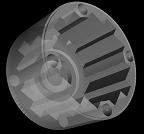
This motor/mount is really awesome!!! About the current draw; Plain simple; If a car is geared for 40 mph on 3S lipo, the current draw will be higher than that same car geared for 40 mph on 5S. But.... It's rather uncommon to increase the number of cells to get more runtime... If you use more lipo's you obviously need more power. If you need more lipo's to get more speed, the current(A) will also increase. The numbers they are talking about don't mean nothing to me. The current they take varies a lot. weight of the vehicle, maxximium amount of power the batteries can deliver before their voltage will drop, gearing, and the power they take under acceleration. |
|
|
|
|
|
|
|
|
|
|
|
|
(#28)
|
|
RC-Monster Mod

Offline
Posts: 6,741
Join Date: Jul 2005
Location: VA in the US
|
11.19.2006, 09:10 AM
I think this was discussed one time before on voltage and amp draw.
With the same resistance. ( same motor on same gearing) If you go from 3 cells to 6cells which is twice the voltage. The amp draw will go up roughly double. A light bulb with more voltage will burn brighter. I know cause i have done this. It won't last long though. |
|
|
|
|
|
|
|
|
|
|
|
|
(#29)
|
|
|
TEAM FUSION

Offline
Posts: 2,041
Join Date: Jul 2006
Location: Iowa... Hawkeye country
|
11.19.2006, 09:41 AM
Quote:
The formulas are correct but you are applying them in reverse. Somebody here has to see this besides me....? |
|
|
|
|
|
|
|
|
|
|
|
|
|
(#30)
|
|
TEAM FUSION
Offline
Posts: 2,041
Join Date: Jul 2006
Location: Iowa... Hawkeye country
|
11.19.2006, 10:05 AM
[QUOTE=BrianG]This thread seems a bit confusing. I agree with GD for the most part.QUOTE]
That's because I'm right, BrianG :005: Look at it this way.... run your car with a watt meter/data recorder in it... on whatever battery you normally run in it. Now add one more cell to it and run it again. Amps (and watts) go up, not down. That's just the facts, it's the way things work. This is not meant to be confused with using higher voltage to be able to run lower gearing and/or lower kv motors to get greater efficiency. I think some are not focusing on the original question about the motor specs. 10v at 100A= 1000W 20v at 50A= 1000W 100v at 10A= 1000W This is true, obviously.... but you can't apply it backwards to our cars and say that a given motor will put out a constant 1000W, therefore, if you run it on more volts, the amps will go down. Again load (gearing) has a big effect on the amp draw, and it's possible that a setup geared for the same top speed may indeed draw less amps on 5s than on 4s with the same performance. I'm sure this is what everyone is thinking of if they disagree with what I have posted. But that's not the point in question. |
|
|
|
|
|
|
 |
«
Previous Thread
|
Next Thread
»
| Currently Active Users Viewing This Thread: 1 (0 members and 1 guests) | |
| Thread Tools | |
| Display Modes | Rate This Thread |


 Linear Mode

|
|

Powered by vBulletin® Version 3.8.11
Copyright ©2000 - 2026, vBulletin Solutions Inc.
vBulletin Skin developed by: vBStyles.com
Copyright ©2000 - 2026, vBulletin Solutions Inc.
vBulletin Skin developed by: vBStyles.com
