
 |
|
|
|
|
|
 |


 |
 |

|
 |

|
(#31)
|
|
|
Monster Bottle Opener

Offline
Posts: 468
Join Date: Jun 2008
|
11.04.2008, 05:49 AM
Quote:
I hate to compair green to orange but here it goes.... The novak hv maxx has recommended gearing suggestions.....while the MMM is still untested on the e-revo. I'm sure in time Traxxas and Castle will give gearing suggestions as well. They will also probably have minimum mAh and C rating requirements for the batteries. Right now, my opinion is that the MMM is having some failures because there has been no suggestion to correctly set certain vehicles up. Look at the Mamba Max, and the sidewinder. They both have gearing suggestions for the more popular vehicles they are put in. In time, the MMM will too. Would you put a pair up a sidewinder ESC with a CMS7700 and run it on 3s lipo? You shouldn't All I'm saying is Castle has done a great job bringing us more power for less money as fast as they could. They will finish writing the manual one day. I, for one, am happy to help them write it. 
 I used a "bottom" line. |
|
|
|

|

 |
 |
 |
|
|
|
|
|
|
(#32)
|
|
RC-Monster Stock
Offline
Posts: 9
Join Date: Aug 2006
Location: Australia
|
11.04.2008, 06:42 AM
It's just I know from working with engineers in the motor industry that when releasing product to the market the spec range is always far lower than the actual limits of the product. You'd find a breaking point at say 1000kg but state the user specs to be ~600kg. If the actual limits of the MMM is 6s I'd be shocked. The limit should probably be closer to 8s. I figured this with the MM as many have ran it at 5s without issue. In other words 6s and 1515 1y Neu should not at all be torturing the esc. And yes as you stated gearing charts, motor & battery combos are also needed.
|
|
|
|
|
|
|
|
|
|
|
|
|
(#33)
|
|
I have no idea what's going on

Offline
Posts: 464
Join Date: Jan 2005
Location: UK
|
11.04.2008, 07:25 AM
You have a point, but from my perspective, there don't seem to have been any failures related to actually overstressing the MMM. In fact, I don't think anyone's really come close to stressing it; Castle themselves have run a a 1521 1D on the MMM with 6S which is an insanely powerful and current-hungry motor, and not had a failure.
You can't really compare mechanical safety margins to electronic margins though, IMO. The MMM is designed for a maximum of 6S LiPo, and will run at that voltage perfectly every time, ignoring any other problems. Its components can handle that voltage just fine, with the FETs rated for 30V and caps for 35V, but not any higher because it they don't need to be to run 6S reliably. The input voltage will never stray above 25.2V, wheras in mechanical designs, stresses may temporarily move above its "design-strength" and you have to take material tolerance deviations into account. Castle certainly know about mechanical tolerances; when testing their motors, even the very worst samples were able to hit at least 85,000RPM before the rotors went (with others reaching over 100,000). As aresult, Castle are only rating them to 60,000. Current-handling ability is where you need plenty of headroom, and the MMM has buckets of that. Only one person has managed to get it as high as 170F when it died, and that seems to be a serious setup error (it would appear so anyway); the MMM shouldn't even thermal until 220F. I'm not trying to argue or anything, but that's just my opinion. 
|
|
|
|
|
|
|
|
|
|
|
|
|
(#34)
|
|
|
Guest
Posts: n/a
|
11.04.2008, 07:54 AM
Quote:
|
|
|
|
|
|
|
|
|
|
|
|
|
|
(#35)
|
|
|
RC-Monster Brushless

Offline
Posts: 2,466
Join Date: Jan 2006
Location: Florida
|
11.04.2008, 08:56 AM
Quote:
1 of those failures was on a unit that even the folks at Castle said appeared that liquid of some sort was sucked in by the fan. If that's the case, and the liquid caused the failure, how is it related to pushing the limits of the ESC? On the 2nd failure where the user was sort of pushing the limits, the battery connector came unplugged while he was braking. If a battery can shift enough to pull the connector free while you're driving, it's a poor setup and purely user error IMO. So, given the facts that have been posted about those 2 specific failures, it's really hard to see how one can draw a conclusion that a setup that pushes the MMM spec limits is really causing a failure. |
|
|
|
|
|
|
|
|
|
|
|
|
|
(#36)
|
|
|
RC-Monster Carbon Fiber
Offline
Posts: 491
Join Date: Sep 2008
Location: Kerrville Tx.
|
11.04.2008, 08:20 PM
Quote:

|
|
|
|
|
|
|
|
|
|
|
|
|
|
(#37)
|
|
RC-Monster Carbon Fiber
Offline
Posts: 491
Join Date: Sep 2008
Location: Kerrville Tx.
|
11.04.2008, 09:22 PM
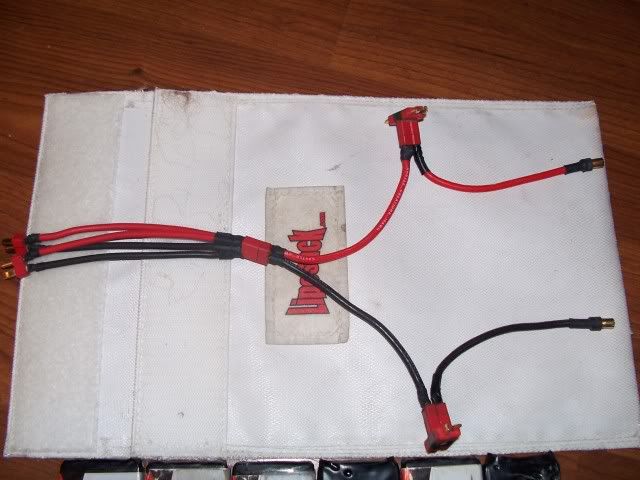
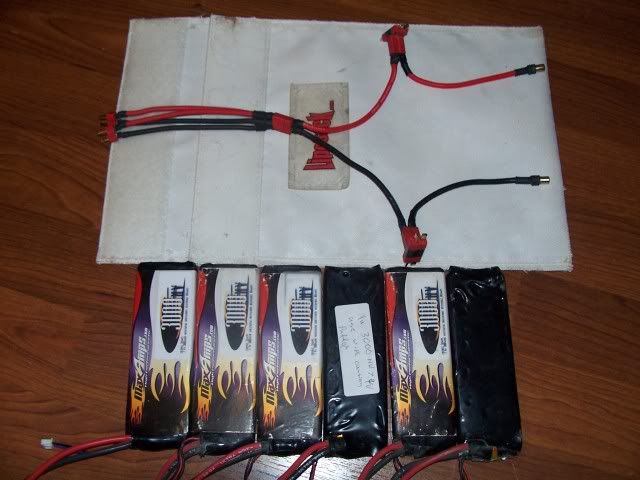
i went out and re-soldered the input leads so i will not have that problem again
|
|
|
|
|
|
|
|
V3 |
|
|
|
|
|
(#38)
|
|
RC-Monster Carbon Fiber
Offline
Posts: 93
Join Date: Aug 2008
|
V3 -
11.04.2008, 10:02 PM
I think you're wiring are too long. It will create resistance in the system and will cause your wires to run hot. Just my opinion.

|
|
|
|
|
|
|
|
|
|
|
|
|
(#39)
|
|
|
RC-Monster Brushless
Offline
Posts: 2,466
Join Date: Jan 2006
Location: Florida
|
11.04.2008, 10:25 PM
Quote:
A much better solution would be to buy batteries that are actually suited for the application. Trying to keep all of those packs in balance will be no small task. |
|
|
|
|
|
|
|
|
|
|
|
|
|
(#40)
|
|
RC-Monster Carbon Fiber

Offline
Posts: 433
Join Date: Oct 2007
|
11.04.2008, 10:31 PM
You guys gotta remember that the majority of the MMM failures were bec related so I am not worried here. These failures dont seem bec related and could be just bad luck. I agree with hoovhartid, I dont think you can just run any combo you like and have it work successfully. Maybe you can and thats great, but motor and gearing must work together based on battery capacity and C rating. It takes a pretty intelligent person and truthful information from battery manufactures to get it right. I think 99% of the people should just be given plug and play setups. The rest of us should be on the RC-MOnster forums.
|
|
|
|
|
|
|
|
|
|
|
|
|
(#41)
|
|
|
RC-Monster Carbon Fiber
Offline
Posts: 491
Join Date: Sep 2008
Location: Kerrville Tx.
|
11.04.2008, 10:41 PM
Quote:
|
|
|
|
|
|
|
|
|
|
|
|
|
|
(#42)
|
|
Something, anything, nothing

Offline
Posts: 2,747
Join Date: Mar 2006
Location: Houston, TX
|
11.04.2008, 11:14 PM
Sorry bud but you are dead wrong. Your calculation is based on everything being to perfection. You have way too many failure points in your setup. That much wiring and all of those connections will cause you problems period. That is one of the worst setups I have ever seen.
|
|
|
|
|
|
|
|
|
|
|
|
|
(#43)
|
|
|
Guest
Posts: n/a
|
11.04.2008, 11:21 PM
Quote:

|
|
|
|
|
|
|
|
|
|
|
|
|
|
(#44)
|
|
RC-Monster Carbon Fiber
Offline
Posts: 491
Join Date: Sep 2008
Location: Kerrville Tx.
|
11.04.2008, 11:31 PM
the whole idea of rewiring was to make it long enough so that they will reach. if i dont i will fry it again and again and again! i dont like making castle fix my mmm after i messed up in the first place!
next are you going to tell me my cc 5mm bullets are to small? or my 1515 is not suited for my aplication? i based that calculation on my electricions book, if you have one look under voltage drop. |
|
|
|
|
|
|
|
|
|
|
|
|
(#45)
|
|
Monster Bottle Opener
Offline
Posts: 468
Join Date: Jun 2008
|
11.04.2008, 11:54 PM
so your running 6 lipos in one vehicle?
....do you have any pics? all I picture is this; 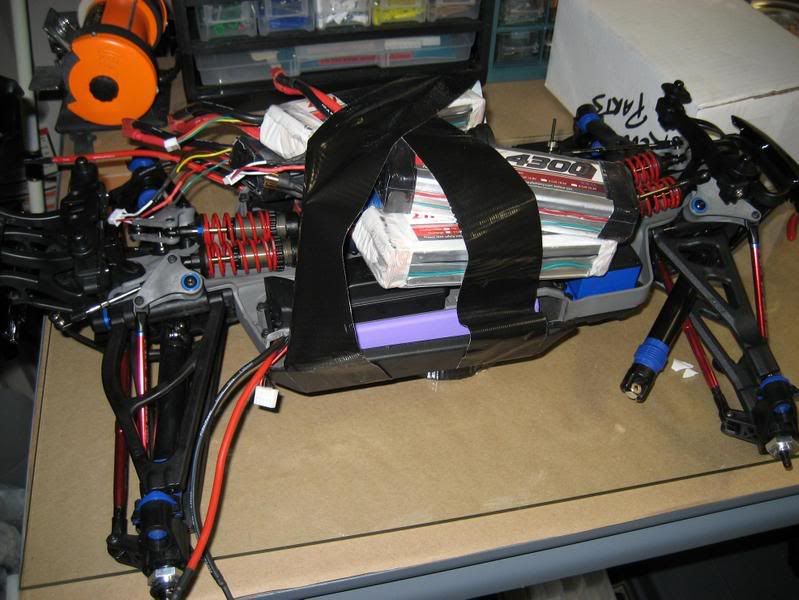 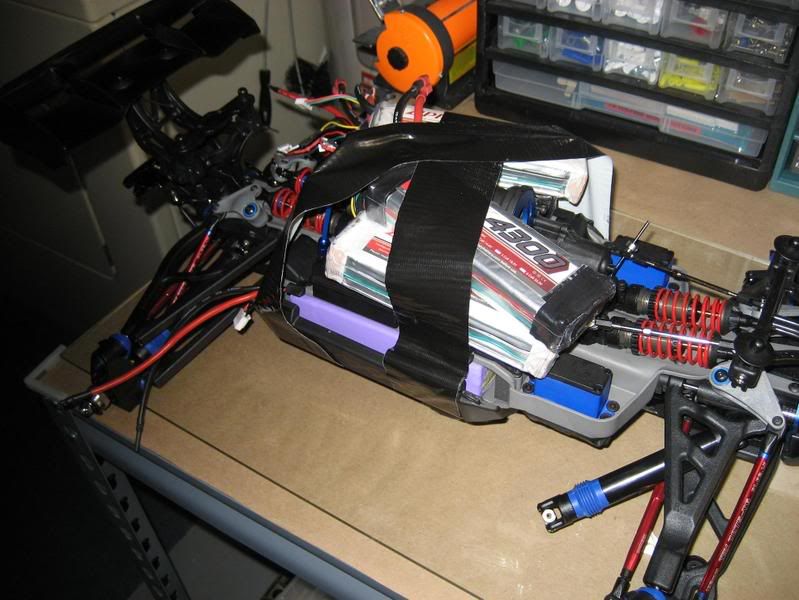 just messin with ya! just messin with ya! 
I used a "bottom" line. |
|
|
|
|
|
|
 |
«
Previous Thread
|
Next Thread
»
| Currently Active Users Viewing This Thread: 1 (0 members and 1 guests) | |
 Linear Mode

|
|

Powered by vBulletin® Version 3.8.11
Copyright ©2000 - 2025, vBulletin Solutions Inc.
vBulletin Skin developed by: vBStyles.com
Copyright ©2000 - 2025, vBulletin Solutions Inc.
vBulletin Skin developed by: vBStyles.com
