
 |
|
|
|
 |


 |
1/5 Scale Leopard Turbine Powered Car / Monster |
 |

|
 |

|
(#1)
|
|
Need for speed
Offline
Posts: 149
Join Date: Jul 2008
Location: Cardiff
|
1/5 Scale Leopard Turbine Powered Car / Monster -
06.03.2010, 02:01 AM
OK Guys this is not quite brushless but I thought you may like this slightly crazy project
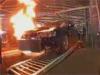
 Lauterbacher / FG Leopard truck was used to mount a Wren XL 200 Turbine. The Turbine develops 15kg of thrust. The Car weighs 12.5kg fully loaded with Jet A1 Turbine fuel. The installed fuel tank will power the car approx 8 minutes. The video shows flames at the start... this was because the gas canister was lying on it's side and was pouring liquid gas. Normally the valve only lets out gas - you can see that as soon as I lifted the gas cartridge the flames disappeared. I left the flames as I thought it added a bit of fun to the video. The throttle / power of the turbine was set at 1/3 of full power (50, 000 rpm) for most of the run apart from end when it was brifely on the paved section. The engine was littlerally idling at that level of thrust but due to size of the space of the garden and I did not want to wreck the car by getting too fast by opening up the throttle (120 000 rpm). The car was controlled by using brakes to slow down rather than changing thrust of the turbine. I know this is not brushless but hopefully you will enjoy the video. Hopefully when we are confident we will take this out to a public place and open the throttle 100% and see what happens. I am waiting on Mikes 1/5 scale Baja Brushless conversion. The donor car (Hpi 5B 2) is waiting, the Brushless Lehner 3060 motor with a Schulze speed controller are going to power this on 10S Lipos... Mohan |
|
|

|
 |
 |
 |
|
|
|
|
|
|
(#2)
|
|
Second place is the first loser!

Offline
Posts: 899
Join Date: Sep 2008
Location: Utah
|
06.03.2010, 02:47 AM
Mohan,
very sick indeed! if your neighbors though petrol was loud wait til they hear that. they are going to think they are waking up on the runways at Heathrow Airport. lol. please, pretty please, go run that thing at full speed on a straight road somewhere and take the camera with ya. want to see that one! oh, and cant wait for you to be able to build your baja conversion. 
Losi Ten-T SCT conversion Neu 1512 1y |
|
|
|
|
|
|
|
|
|
|
|
|
(#3)
|
|
working on a brushless for my wheelchair.....

Offline
Posts: 4,890
Join Date: Mar 2007
Location: minnesnowta
|
06.03.2010, 02:57 AM
awesome indeed Mojan. I love crossover vehicles like this. You've obviously used your helicopter (turbine) knowledge and created an over the top car. Too awesome, definitely RCM worthy!!!
I hope to see that full throttle video. 
It's "Dr. _paralyzed_" actually. Not like with a PhD, but Doctor like in Dr. Pepper. |
|
|
|
|
|
|
|
|
|
|
|
|
(#4)
|
|
RC-Monster Carbon Fiber
Offline
Posts: 170
Join Date: Aug 2008
|
06.03.2010, 07:21 AM
Brushless or not, definatly cool! I love the sound of a turbine.
-JB |
|
|
|
|
|
|
|
|
|
|
|
|
(#5)
|
|
Technology Explorer
Offline
Posts: 243
Join Date: May 2010
Location: Sweden
|
06.03.2010, 07:55 AM
You are my new hero!!! - why does my 14s truck feel so lame now??
I'd love to see a straight pull on that beast.. |
|
|
|
|
|
|
|
|
|
|
|
|
(#6)
|
|
RC-Monster Titanium

Offline
Posts: 1,152
Join Date: Sep 2008
|
06.03.2010, 08:20 AM
That's freaking AWESOME!
When you do the full speed run will you be using the throttle and brake? I can't imagine brakes will stop that thing at full throttle. Do you have a predicted speed? |
|
|
|
|
|
|
|
|
|
|
|
|
(#7)
|
|
Something, anything, nothing

Offline
Posts: 2,747
Join Date: Mar 2006
Location: Houston, TX
|
06.03.2010, 09:35 AM
That's awesome and I am sure your neighbors love the noise too!
|
|
|
|
|
|
|
|
|
|
|
|
|
(#8)
|
|
2 KiloWatt RACER
Offline
Posts: 2,496
Join Date: May 2007
Location: Houston
|
06.03.2010, 09:40 AM
Wow! That sounded great man. I still have a headache from the high pitch noise. I would love to see the 120Krpm run.
GTP-Pletty Big Maxximum+RX8. GTP-C50-6L Hacker+RX8. CRT.5-Pro4+ZTW esc. 24s2p EVG SX 49.6mph Ebike. 18s4p Raptor 60mph Ebike. 11.5KW |
|
|
|
|
|
|
|
|
|
|
|
|
(#9)
|
|||
|
RC-Monster Titanium
Offline
Posts: 1,402
Join Date: Aug 2008
Location: Twin Citys Mn
|
06.03.2010, 10:44 AM
Quote:
Quote:
Quote:
|
|||
|
|
|

|
|
|
|
|
|
|
|
|
(#10)
|
|
Smelly Nitro meet your maker!

Offline
Posts: 832
Join Date: Nov 2009
Location: So close to hell I see Sparks.
|
06.03.2010, 10:45 AM
I love it. I always dream of a turbine conversion, or possibly a mini v8 conversion. Too cool.
|
|
|
|
|
|
|
|
|
|
|
|
|
(#11)
|
|
Need for speed
Offline
Posts: 149
Join Date: Jul 2008
Location: Cardiff
|
06.03.2010, 12:55 PM
This is the first time I have installed a turbine in a car and run it. So learning a lot each time.
It is already apparent that when the brakes are fully applied the car just glides on locked wheels at anything more than 50 % throttle. So brakes will be useless in an emergency at anything more than says 60% throttle - it will help control the vehicle but not stop it if the turbine is still producing thrust. Even when you cut the throttle there is a latency of about 2-3 seconds before thrust drops (fuel in the system / inertia of turbine compressor etc) What is clear is that thrust is very much different to having powered wheels. Even if the vehicle jumps off the ground say during a bump / uneven road surface the vehicle will continue to go forwards as it does not need wheels to keep it in foward motion. What is also worrying is that if the front end becomes light there will be no realistic prospect of steering or braking. The turbine is angled downwards to minimise the possibility of lift but didn't want to sacrifice thrust moving the vehicle forwards by having the vector towards the ground. Steering will also be a problem at high rpm / thrust as the turbine always wants to go forwards - it would be nice if the car could bank or the turbine could swivel when turning the wheels. It feels weird when you turn the steering and the car tries to keep going forward until the back end follows through at reasonably low rpm ... wonder what happens when the turbine is screaming at 100,000 + rpm ? Going to test run this for a little at low rpm, different road surfaces etc.. before venturing onto a open space / airstrip and opening full throttle. I think straight speed runs should be no problem. Now where did they go and test the Thrust SCC car that was holding the land speed record???  Anybody got any thoughts about the physics involved here? thanks for the positive comments.... Mohan |
|
|
|
|
|
|
|
|
|
|
|
|
(#12)
|
|
Something, anything, nothing
Offline
Posts: 2,747
Join Date: Mar 2006
Location: Houston, TX
|
06.03.2010, 01:45 PM
Wondering if some front end air deflection is in order. Is there anyway to set up a thrust vectoring type system to aid with steering. Something that responds in turn with the steering servo. I have seen some ducted fan planes with thrust vectoring but nothing in the turbine arena. If not maybe some rudders front and rear kind of like an air boat uses.
|
|
|
|
|
|
|
|
|
|
|
|
|
(#13)
|
|
RC-Monster Dual Brushless

Offline
Posts: 5,139
Join Date: Sep 2006
|
06.03.2010, 02:35 PM
You are the man Mohan. Just awesome.
|
 |
|
|
|
|
|
|
|
|
|
|
(#14)
|
|
RC-Monster Square Tube

Offline
Posts: 1,367
Join Date: Jun 2008
Location: CNY
|
06.03.2010, 05:33 PM
Looks like you found an alternative to raking come fall... that's gotta be the world's most expenive leafblower :)
Very cool. Just a few concerns I'd have however. The first one obviously is that any substantial debris that got ingested could grenade it. The second is the shock load the bearings might see on a moderate impact. Could be an expensive problem. I would imagine you'd only run it in clean areas, but still the off chance. That engine might find a better home in a larger custom chassis I'm thinking. The best you could do for brakes would be a thrust reverser, like the big jets use. You could adjust the backflow proportionately semi-independent of throttle position. Best I can come up with.. A different breed indeed! My Videos: http://vimeo.com/user2236105/videos |
|
|
|
|
|
|
|
|
|
|
|
|
(#15)
|
|
Smelly Nitro meet your maker!
Offline
Posts: 832
Join Date: Nov 2009
Location: So close to hell I see Sparks.
|
06.03.2010, 05:51 PM
I think you need to fab up some wings onto the chassis...
No but maybe a thrust diverter. Something attached to a servo, on the same channel as your other servo, that diverts the thrust in the direction your turning. |
|
|
|
|
|
|
 |
«
Previous Thread
|
Next Thread
»
| Currently Active Users Viewing This Thread: 1 (0 members and 1 guests) | |
| Thread Tools | |
| Display Modes | Rate This Thread |


 Linear Mode

|
|

Powered by vBulletin® Version 3.8.11
Copyright ©2000 - 2026, vBulletin Solutions Inc.
vBulletin Skin developed by: vBStyles.com
Copyright ©2000 - 2026, vBulletin Solutions Inc.
vBulletin Skin developed by: vBStyles.com
