RC-Monster Forums  

Go Back   RC-Monster Forums > Support Forums > Castle Creations

Reply
 
Thread Tools Rating: Thread Rating: 19 votes, 5.00 average. Display Modes
Old
  (#1)
Knez
RC-Monster Carbon Fiber
 
Knez's Avatar
 
Offline
Posts: 142
Join Date: Mar 2010
Location: Slovenia
01.13.2011, 01:44 PM

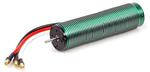
Sorry for offtopic guys... here i found this 6 pole 2560kv motor
http://www.hobbyking.com/hobbyking/s...dProduct=14632

Specs:
Size: 40-68
Kv: 2560
Poles: 6
Max Amps: 120A
Max Volts: 21v
Max Watts: 2200w
Idle Current: 5.0A
Resistance (Ri): 5.8
Shaft size: 5mm


Flux 5B CC 1520
1/16 Rally

My Youtube

Russian:Life and Trust is Lost Only Once!
   
Reply With Quote
Old
  (#2)
Pdelcast
RC-Monster Titanium
 
Pdelcast's Avatar
 
Offline
Posts: 1,697
Join Date: Mar 2008
01.13.2011, 02:33 PM

Quote:
Originally Posted by Knez View Post
Sorry for offtopic guys... here i found this 6 pole 2560kv motor

Poles: 6
Max Amps: 120A
Max Volts: 21v
Max Watts: 2200w
Idle Current: 5.0A
Resistance (Ri): 5.8
Shaft size: 5mm
And it probably will perform pretty poorly. 5.0A no load, and 5.8milliohms resistance? Terrible...


Patrick del Castillo
President, Principle Engineer
Castle Creations
   
Reply With Quote
Old
  (#3)
lincpimp
Check out my huge box!
 
lincpimp's Avatar
 
Offline
Posts: 11,935
Join Date: Aug 2007
Location: Slidell, LA
01.13.2011, 02:42 PM

Quote:
Originally Posted by Pdelcast View Post
And it probably will perform pretty poorly. 5.0A no load, and 5.8milliohms resistance? Terrible...
Methinks that CC could produce a short paper about motor specs and enlighten the rest of the unwashed masses about what to look for and what the various specs mean.
   
Reply With Quote
Old
  (#4)
thzero
RC-Monster Aluminum
 
Offline
Posts: 800
Join Date: Oct 2009
01.13.2011, 03:02 PM

But then their "competitors" would know what to do... :) Of course knowing what to do and being able to do it are two different things.

Quote:
Originally Posted by lincpimp View Post
Methinks that CC could produce a short paper about motor specs and enlighten the rest of the unwashed masses about what to look for and what the various specs mean.
   
Reply With Quote
Old
  (#5)
Pdelcast
RC-Monster Titanium
 
Pdelcast's Avatar
 
Offline
Posts: 1,697
Join Date: Mar 2008
01.13.2011, 03:46 PM

Quote:
Originally Posted by thzero View Post
But then their "competitors" would know what to do... :) Of course knowing what to do and being able to do it are two different things.
I'm sure they know what to do, but being willing to do it is another story -- like I said, it's expensive to make a good quality motor. And if you are competing for market on price alone, then quality is the easiest thing to sacrifice.


Patrick del Castillo
President, Principle Engineer
Castle Creations
   
Reply With Quote
Old
  (#6)
thzero
RC-Monster Aluminum
 
Offline
Posts: 800
Join Date: Oct 2009
01.13.2011, 03:53 PM

Yes, thats true too.

Quote:
Originally Posted by Pdelcast View Post
I'm sure they know what to do, but being willing to do it is another story -- like I said, it's expensive to make a good quality motor. And if you are competing for market on price alone, then quality is the easiest thing to sacrifice.
   
Reply With Quote
Old
  (#7)
Pdelcast
RC-Monster Titanium
 
Pdelcast's Avatar
 
Offline
Posts: 1,697
Join Date: Mar 2008
01.13.2011, 03:04 PM

Quote:
Originally Posted by lincpimp View Post
Methinks that CC could produce a short paper about motor specs and enlighten the rest of the unwashed masses about what to look for and what the various specs mean.
It's actually pretty simple:

The no-load current tells you the approximate magnetic efficiency of the motor. Lower is better.

The steel for laminations comes in many varieties. Most of the cheap motors use either .35mm or .5mm laminations. The thinner laminations are more efficient. The cost for the steel goes up significantly with thinner steel (because it needs a LOT more processing to make thinner steels.)

The other variable in steel is the amount of silicon (sand) that they add to the steel. The silicon increases the electrical resistance of the steel, increasing the magnetic efficiency by lowering electrical losses (you want the steel to be good at conducting magnetism, but poor at conducting electricity.) The higher the silicon content, the more brittle the steel and the longer it takes to process (and therefore, the more expensive it is.)

So, the cheap steels are thick with a low silicon content, and the expensive steels are thin with a high silicon content.

We use .2mm thick, high silicon content steel. Most of our competitor use .35mm or .5mm low silicon content steel. The .2mm high silicon steel is about four to five times more expensive than .35mm high silicon steel, and about ten times more expensive than .5mm low silicon steel.

But the difference is large: A 1415-2400Kv motor from Castle has a no-load current of about 2.4A.

To figure the magnetic losses, you multiply the no-load current by the battery voltage.

So, for example:

Hobbyking motor: 5A * 24V = 120 watts of magnetic loss
Castle 1415-2400Kv motor: 2.4A * 24V = 57.6 watts of magnetic loss

--------------------------------------

The second type of loss is resistive loss. This is the loss caused by the current flowing through the copper.

The Hobbyking motor lists a 5.8 milliohm resistance. The Castle 1415-2400kV motor has a resistance of 4.2 milliohms.

The formula for resistive losses is (Current in amps) ^2 * resistance (amps squared times resistance)

So, at 125 Amps (the "rating" from the hobbyking motor) the losses would be:

Hobbyking motor: (125)^2 * .0058 (ohms) = ~90 watts
Castle 1415-2400: (125)^2 * .0042 (ohms) = ~65 watts

---------------------------

These two types of loss (magnetic and resistive) add up in the motor, and get turned into heat.

So to make a good motor, you need both low resistance (for low copper losses) and low no-load current (for low magnetic losses.)

To compare the two motors:

Losses at 24V battery voltage, 120A current:

HobbyKing motor: 90 watts (resistive) + 120 watts (magnetic) = 210 watts of loss
Castle 1415-2400Kv: 65 watts (resistive) + 58 watts (magnetic) = 123 watts of loss

Because the "loss" watts ALL TURN INTO HEAT, the Castle motor will run much cooler in the same setup -- it's efficiency is much higher.

It all comes down to this: It's expensive to make a good quality motor. And, you get what you pay for.


Patrick del Castillo
President, Principle Engineer
Castle Creations
   
Reply With Quote
Old
  (#8)
BrianG
RC-Monster Admin
 
BrianG's Avatar
 
Offline
Posts: 14,609
Join Date: Nov 2005
Location: Des Moines, IA
01.13.2011, 05:41 PM

Quote:
Originally Posted by Pdelcast View Post
It's actually pretty simple:

The no-load current tells you the approximate magnetic efficiency of the motor. Lower is better.

The steel for laminations comes in many varieties. Most of the cheap motors use either .35mm or .5mm laminations. The thinner laminations are more efficient. The cost for the steel goes up significantly with thinner steel (because it needs a LOT more processing to make thinner steels.)

The other variable in steel is the amount of silicon (sand) that they add to the steel. The silicon increases the electrical resistance of the steel, increasing the magnetic efficiency by lowering electrical losses (you want the steel to be good at conducting magnetism, but poor at conducting electricity.) The higher the silicon content, the more brittle the steel and the longer it takes to process (and therefore, the more expensive it is.)

So, the cheap steels are thick with a low silicon content, and the expensive steels are thin with a high silicon content.

We use .2mm thick, high silicon content steel. Most of our competitor use .35mm or .5mm low silicon content steel. The .2mm high silicon steel is about four to five times more expensive than .35mm high silicon steel, and about ten times more expensive than .5mm low silicon steel.

But the difference is large: A 1415-2400Kv motor from Castle has a no-load current of about 2.4A.

To figure the magnetic losses, you multiply the no-load current by the battery voltage.

So, for example:

Hobbyking motor: 5A * 24V = 120 watts of magnetic loss
Castle 1415-2400Kv motor: 2.4A * 24V = 57.6 watts of magnetic loss

--------------------------------------

The second type of loss is resistive loss. This is the loss caused by the current flowing through the copper.

The Hobbyking motor lists a 5.8 milliohm resistance. The Castle 1415-2400kV motor has a resistance of 4.2 milliohms.

The formula for resistive losses is (Current in amps) ^2 * resistance (amps squared times resistance)

So, at 125 Amps (the "rating" from the hobbyking motor) the losses would be:

Hobbyking motor: (125)^2 * .0058 (ohms) = ~90 watts
Castle 1415-2400: (125)^2 * .0042 (ohms) = ~65 watts

---------------------------

These two types of loss (magnetic and resistive) add up in the motor, and get turned into heat.

So to make a good motor, you need both low resistance (for low copper losses) and low no-load current (for low magnetic losses.)

To compare the two motors:

Losses at 24V battery voltage, 120A current:

HobbyKing motor: 90 watts (resistive) + 120 watts (magnetic) = 210 watts of loss
Castle 1415-2400Kv: 65 watts (resistive) + 58 watts (magnetic) = 123 watts of loss

Because the "loss" watts ALL TURN INTO HEAT, the Castle motor will run much cooler in the same setup -- it's efficiency is much higher.

It all comes down to this: It's expensive to make a good quality motor. And, you get what you pay for.

Great info Patrick! I added this to the "technical explanations" sticky...
  Send a message via Yahoo to BrianG Send a message via MSN to BrianG  
Reply With Quote
Great information
Old
  (#9)
JERRY2KONE
JERRY2KONE SUPERMAXX
 
JERRY2KONE's Avatar
 
Offline
Posts: 3,452
Join Date: Sep 2006
Location: HAYMARKET VIRGINIA
Great information - 01.13.2011, 08:25 PM

Thanks Patrick that is some great information. That is the first time someone tried to explain efficiancy losses in a way that makes perfect sense to me. It helps a lot knowing this when considering what motor to buy and who to buy them from. Now I understand why certain motors get so hot on a regular basis and are cosidered to be a bad buy. You should share more stuff like this with us, because it equates to better sales as people truly understand what the differences are. I mean its obvious to some of us who have been at this for a while, but for the newbs who have no idea this is an easy way for them to learn. Thank you Sir, and keep up the good work. GO CC.


SUPERMAXX YOUR LIFE.
   
Reply With Quote
Old
  (#10)
sikeston34m
RC-Monster Brushless
 
sikeston34m's Avatar
 
Offline
Posts: 2,085
Join Date: Sep 2007
01.13.2011, 08:46 PM

Quote:
Originally Posted by Pdelcast View Post
It's actually pretty simple:

The no-load current tells you the approximate magnetic efficiency of the motor. Lower is better.

The steel for laminations comes in many varieties. Most of the cheap motors use either .35mm or .5mm laminations. The thinner laminations are more efficient. The cost for the steel goes up significantly with thinner steel (because it needs a LOT more processing to make thinner steels.)

The other variable in steel is the amount of silicon (sand) that they add to the steel. The silicon increases the electrical resistance of the steel, increasing the magnetic efficiency by lowering electrical losses (you want the steel to be good at conducting magnetism, but poor at conducting electricity.) The higher the silicon content, the more brittle the steel and the longer it takes to process (and therefore, the more expensive it is.)

So, the cheap steels are thick with a low silicon content, and the expensive steels are thin with a high silicon content.

We use .2mm thick, high silicon content steel. Most of our competitor use .35mm or .5mm low silicon content steel. The .2mm high silicon steel is about four to five times more expensive than .35mm high silicon steel, and about ten times more expensive than .5mm low silicon steel.

But the difference is large: A 1415-2400Kv motor from Castle has a no-load current of about 2.4A.

To figure the magnetic losses, you multiply the no-load current by the battery voltage.

So, for example:

Hobbyking motor: 5A * 24V = 120 watts of magnetic loss
Castle 1415-2400Kv motor: 2.4A * 24V = 57.6 watts of magnetic loss

--------------------------------------

The second type of loss is resistive loss. This is the loss caused by the current flowing through the copper.

The Hobbyking motor lists a 5.8 milliohm resistance. The Castle 1415-2400kV motor has a resistance of 4.2 milliohms.

The formula for resistive losses is (Current in amps) ^2 * resistance (amps squared times resistance)

So, at 125 Amps (the "rating" from the hobbyking motor) the losses would be:

Hobbyking motor: (125)^2 * .0058 (ohms) = ~90 watts
Castle 1415-2400: (125)^2 * .0042 (ohms) = ~65 watts

---------------------------

These two types of loss (magnetic and resistive) add up in the motor, and get turned into heat.

So to make a good motor, you need both low resistance (for low copper losses) and low no-load current (for low magnetic losses.)

To compare the two motors:

Losses at 24V battery voltage, 120A current:

HobbyKing motor: 90 watts (resistive) + 120 watts (magnetic) = 210 watts of loss
Castle 1415-2400Kv: 65 watts (resistive) + 58 watts (magnetic) = 123 watts of loss

Because the "loss" watts ALL TURN INTO HEAT, the Castle motor will run much cooler in the same setup -- it's efficiency is much higher.

It all comes down to this: It's expensive to make a good quality motor. And, you get what you pay for.
Thank you Patrick. I've pondered some of these variables, back when I was experimenting with rewinding outrunner motors. John Rob and I were playing around with some ideas at the time.

I wonder why the thinner laminations work so much better at conducting magnetism? I'm sure it has alot to do with, the core of the lamination isn't what does the work since the magnetism follows surface area. The greater number of laminations in the same amount of space equals more surface area, thus conducting more magnetism overall.

I was glad to see that you chose a comparable kv rating for no load current. Kv does directly affect no load current, correct?

Resistive losses change from one motor wind to the next. I'm sure this is why a 1 or 2 turn motor has less overall resistence.

I know this isn't practical, but for the sake of efficiency, wouldn't a motor wound with silver wire work better than copper?

Overall resistence is also based on how good of a conductor, the wind wire is.

Guys, I have a feeling what Patrick posted here is "in a nutshell". I'm sure there's ALOT more to "the big picture".

Last edited by sikeston34m; 01.13.2011 at 08:52 PM.
   
Reply With Quote
Old
  (#11)
BrianG
RC-Monster Admin
 
BrianG's Avatar
 
Offline
Posts: 14,609
Join Date: Nov 2005
Location: Des Moines, IA
01.13.2011, 09:39 PM

Quote:
Originally Posted by sikeston34m View Post
...I wonder why the thinner laminations work so much better at conducting magnetism? I'm sure it has alot to do with, the core of the lamination isn't what does the work since the magnetism follows surface area. The greater number of laminations in the same amount of space equals more surface area, thus conducting more magnetism overall...
I believe it has to do with eddy currents. Smaller laminations means smaller eddy currents. Think of them as "magnetic resistance", and like resistors, more flow (magnetic flux in this case) across that "resistance" creates heat (loss).
  Send a message via Yahoo to BrianG Send a message via MSN to BrianG  
Reply With Quote
Old
  (#12)
Pdelcast
RC-Monster Titanium
 
Pdelcast's Avatar
 
Offline
Posts: 1,697
Join Date: Mar 2008
01.14.2011, 10:17 AM

Quote:
Originally Posted by sikeston34m View Post
Thank you Patrick. I've pondered some of these variables, back when I was experimenting with rewinding outrunner motors. John Rob and I were playing around with some ideas at the time.

I wonder why the thinner laminations work so much better at conducting magnetism? I'm sure it has alot to do with, the core of the lamination isn't what does the work since the magnetism follows surface area. The greater number of laminations in the same amount of space equals more surface area, thus conducting more magnetism overall.

I was glad to see that you chose a comparable kv rating for no load current. Kv does directly affect no load current, correct?

Resistive losses change from one motor wind to the next. I'm sure this is why a 1 or 2 turn motor has less overall resistence.

I know this isn't practical, but for the sake of efficiency, wouldn't a motor wound with silver wire work better than copper?

Overall resistence is also based on how good of a conductor, the wind wire is.

Guys, I have a feeling what Patrick posted here is "in a nutshell". I'm sure there's ALOT more to "the big picture".
As Brian said earlier, the thinner laminations allow fewer eddy currents to form that are perpendicular to the magnetic field, and resist the field.
This is the same reason why high electrical resistance is a good thing -- the eddy currents that do form will be lower in power if the resistance of the steel is high.

Silver is a better conductor than copper, but costs so much that it's not practical. And it's only a little bit (I think about 20% or so) better than copper.

And it's not just the cost of the metal -- it's the processing too. There are very few manufacturers that are setup to process silver into electrical wire, and there are a few applications which demand it (some space applications.) So they command a HUGE premium. After processing, silver wire is around $2500 a pound. That would make a 1515 cost somewhere in the $600.00-$800.00 (just an estimate!!!) range.


Patrick del Castillo
President, Principle Engineer
Castle Creations
   
Reply With Quote
Old
  (#13)
brushlessboy16
Im not dark, Im over ripened! xD
 
brushlessboy16's Avatar
 
Offline
Posts: 5,607
Join Date: Sep 2007
Location: Westampton NJ
01.14.2011, 12:26 PM

Quote:
Originally Posted by Pdelcast View Post
As Brian said earlier, the thinner laminations allow fewer eddy currents to form that are perpendicular to the magnetic field, and resist the field.
This is the same reason why high electrical resistance is a good thing -- the eddy currents that do form will be lower in power if the resistance of the steel is high.

Silver is a better conductor than copper, but costs so much that it's not practical. And it's only a little bit (I think about 20% or so) better than copper.

And it's not just the cost of the metal -- it's the processing too. There are very few manufacturers that are setup to process silver into electrical wire, and there are a few applications which demand it (some space applications.) So they command a HUGE premium. After processing, silver wire is around $2500 a pound. That would make a 1515 cost somewhere in the $600.00-$800.00 (just an estimate!!!) range.

Have you ever thought of making a limited run of like "ultimate motors"

Like a batch of 150 1515's with silver angel hair wire, 1mm air gap, monster magnets and low drag bearings..


expensive yest. but with your PR you could market it and it would probably sell out..


...not to mention that the motors would be absolutely INSANE!


Benjamin White
R/c Monster Team Driver
Jq the car, LST, Sportweks turmoil pro
Unconventional Techniques, Superior Results
  Send a message via Yahoo to brushlessboy16 Send a message via AIM to brushlessboy16 Send a message via MSN to brushlessboy16  
Reply With Quote
Old
  (#14)
brushlessboy16
Im not dark, Im over ripened! xD
 
brushlessboy16's Avatar
 
Offline
Posts: 5,607
Join Date: Sep 2007
Location: Westampton NJ
01.13.2011, 10:17 PM

Quote:
Originally Posted by Pdelcast View Post
And it probably will perform pretty poorly. 5.0A no load, and 5.8milliohms resistance? Terrible...
Jesus! 5amp no load current on an inrunner!?

I have a big 80-100 outrunner that does 4amps with load


Benjamin White
R/c Monster Team Driver
Jq the car, LST, Sportweks turmoil pro
Unconventional Techniques, Superior Results
  Send a message via Yahoo to brushlessboy16 Send a message via AIM to brushlessboy16 Send a message via MSN to brushlessboy16  
Reply With Quote
Old
  (#15)
nuz69
RC-Monster Carbon Fiber
 
nuz69's Avatar
 
Offline
Posts: 471
Join Date: Feb 2010
01.14.2011, 05:41 AM

Patrick, this isn't exactly right, there is a small amount of power which is lost in the bearings and in the air friction no ?
The motor is not really at "no load" but "air loaded".
Maybe it's only 0,5 or 1% of the no load power... What's your opinion about aerodynamics and bearings losses ?
(I doubt that a lot power is lost in the bearings anyway, other than that they would be quickly ripped apart...)


Inferno VE MMv3 NEU-CC 1515/1Y 4S "Flying machine"

MBX5T Prospec MMv3 NEU-CC 1520/1Y 6S "Overkill Flying machine" ;)

Brushless, what else ?
   
Reply With Quote
Reply


Currently Active Users Viewing This Thread: 1 (0 members and 1 guests)
 
Thread Tools
Display Modes Rate This Thread
Rate This Thread:

Posting Rules
You may not post new threads
You may not post replies
You may not post attachments
You may not edit your posts

BB code is On
Smilies are On
[IMG] code is On
HTML code is Off

Forum Jump


Powered by vBulletin® Version 3.8.11
Copyright ©2000 - 2025, vBulletin Solutions Inc.
vBulletin Skin developed by: vBStyles.com